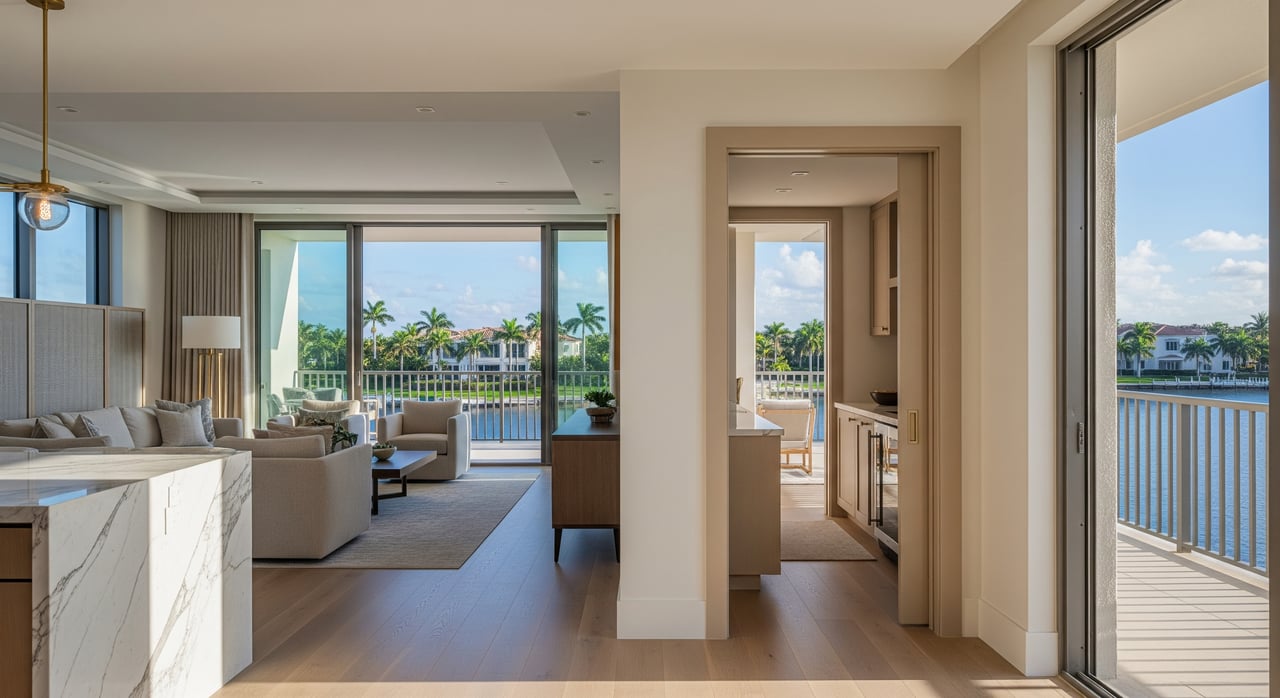
Top L’Ambiance Floor Plans For Multi-Gen Living
December 11, 2025
December 11, 2025
Thinking about bringing parents, adult children, or extended family under one roof at L’Ambiance of Via Verde? You are not alone. More Palm Beach County buyers are looking for layouts that balance privacy with together time while keeping daily life simple and safe. In this guide, you will learn what floor plan features support multigenerational living, which building and HOA details to verify, and how to compare options confidently. Let’s dive in.
In the West Palm Beach–Boca Raton–Delray Beach market, families often prioritize convenience, accessibility, and long‑term value. Multigenerational living can offer cost savings and support, but only if the layout and building policies match your needs. Since condo rules and unit configurations vary, your best move is to focus on clear, practical criteria and verify every detail before you buy.
Use this short list to screen L’Ambiance options fast:
Below are layout styles that commonly fit multigenerational households. Availability can change, so verify each plan within current listings and association rules.
A split 2 bedroom or 3 bedroom plan places sleeping suites at opposite ends of the home. This separation adds quiet and independence for parents, in‑laws, or adult children. Look for en suite bathrooms and ample closet space in both suites.
A 3 bedroom corner or mid‑unit plan often creates a private third bedroom zone. This can serve as a guest suite, children’s area, or a more secluded space for a caregiver. Corner orientations can also improve natural light and reduce noise transfer.
A den or flex room adds versatility, letting you create a semi‑private suite or home office. Confirm that any converted sleeping space meets egress and window requirements. If you are considering a small kitchenette, ask about HOA approvals and permitting before planning.
If available, ground‑level or townhouse‑style condos with a private entry can make daily life easier for aging parents and younger children. Patios and direct access also support outdoor time without using common hallways.
Some resort‑style condos allow a portion of the home to function as an independent suite. Verify carefully whether any L’Ambiance layouts support a true lock‑off and whether the HOA permits partial separation, secondary kitchens, or long‑term use by a non‑owner family member.
Condo policies and infrastructure can make or break a multigenerational plan. Before you commit, confirm the details below with the listing agent and association.
If you are considering an upper floor, evaluate the number of elevators, maintenance history, and backup power provisions. This is essential for anyone with mobility needs.
Confirm how many assigned spaces come with the unit and how guest parking is managed. If your household has multiple vehicles or frequent visitors, you will want a parking plan that works.
Review occupancy policies, age restrictions if any, and rental rules. Ask about modification approvals for items like widening doors or adding a kitchenette. Clarify monthly fees, reserve funding, and any recent or upcoming assessments.
Coastal South Florida can mean higher premiums. Check the FEMA flood zone status for the property, what the master condo policy covers, and what will fall to you as the unit owner. Confirm wind mitigation features and typical costs for your lender’s requirements.
Consider how amenities support daily life for all ages, such as pools, fitness rooms, or clubhouses. Proximity to hospitals, urgent care, pharmacies, and grocery stores can be a meaningful advantage for multigenerational households.
If you are listing a home that could work for multigenerational buyers, help them picture life there:
The best L’Ambiance homes for multigenerational living combine privacy, accessibility, and flexibility. Focus on split suites, a true third bedroom or a convertible den, and enough bathrooms and storage to keep the household running smoothly. Then verify building access, HOA rules, insurance needs, and parking to ensure daily life is easy for everyone.
If you would like a local guide to help compare current L’Ambiance listings, request HOA documents, and align a floor plan with your family’s needs, reach out to the Elite Home Team. Our concierge service, bilingual support, and neighborhood expertise make your next move simpler.

Whether you are looking to BUY or SELL, Elite Home Team understands this is one of the biggest investments of your life. Let our experience “move” you through every step of the process. Our relationships with our clients last long after the close of the sale. That philosophy drives our work ethic and leads to the success of our business.
ELITE HOME TEAM
Serving Palm Beach Areas
SALLIANNE SERRA
(561) 436-2458
[email protected]
Serving Sarasota Manatee Areas
CHRISTIAN QUINTANA
(561) 596 2214
[email protected]
8961 HYPOLUXO ROAD LAKE WORTH FL 33467